Home espresso has changed dramatically in the last five years. Machines that used to require a $1,500 price tag and a barista certification now pull café-quality shots for under $500. The trick: PID temperature control, 9-bar pump pressure, and a steam wand powerful enough to actually texture milk. Skip any of those three, and you end up with sour, weak, or burnt-tasting coffee no matter how good your beans are.
We ordered eight of the most-bought home espresso machines on Amazon across four price tiers ($200, $400, $700, and $1,500). Each was tested for five weeks by two home baristas using the same grinder (a Baratza Encore ESP) and the same beans (a fresh medium roast from a local roaster). Every shot was pulled on the same day, weighed, and rated.
How we tested
For each machine, we ran three test routines:
- Calibration — temperature stability at 93°C / 200°F (the standard for espresso) over a 10-minute window
- Shot quality — 18g in, 36g out in 27 seconds, evaluated on crema color, taste balance (sourness vs. bitterness), and surface tension on the spent puck
- Steam performance — time to texture 6 oz of milk to 65°C / 150°F with proper microfoam
We recorded daily usability: warm-up time, noise during pull, how often the machine needed descaling or backflushing, and whether the included tamper and portafilter basket were usable or needed to be replaced.
The top three at a glance
| Pick | Model | Best for | Price (approx.) |
|---|---|---|---|
| Editor's pick | Breville Bambino Plus | Beginners who want café shots without the learning curve | $$ |
| Best mid-range | Gaggia Classic Pro (with PID mod) | Hobbyists ready to tinker | $$ |
| Premium pick | Profitec Pro 600 | Prosumer dual-boiler performance | $$$$ |
Editor's pick: Breville Bambino Plus
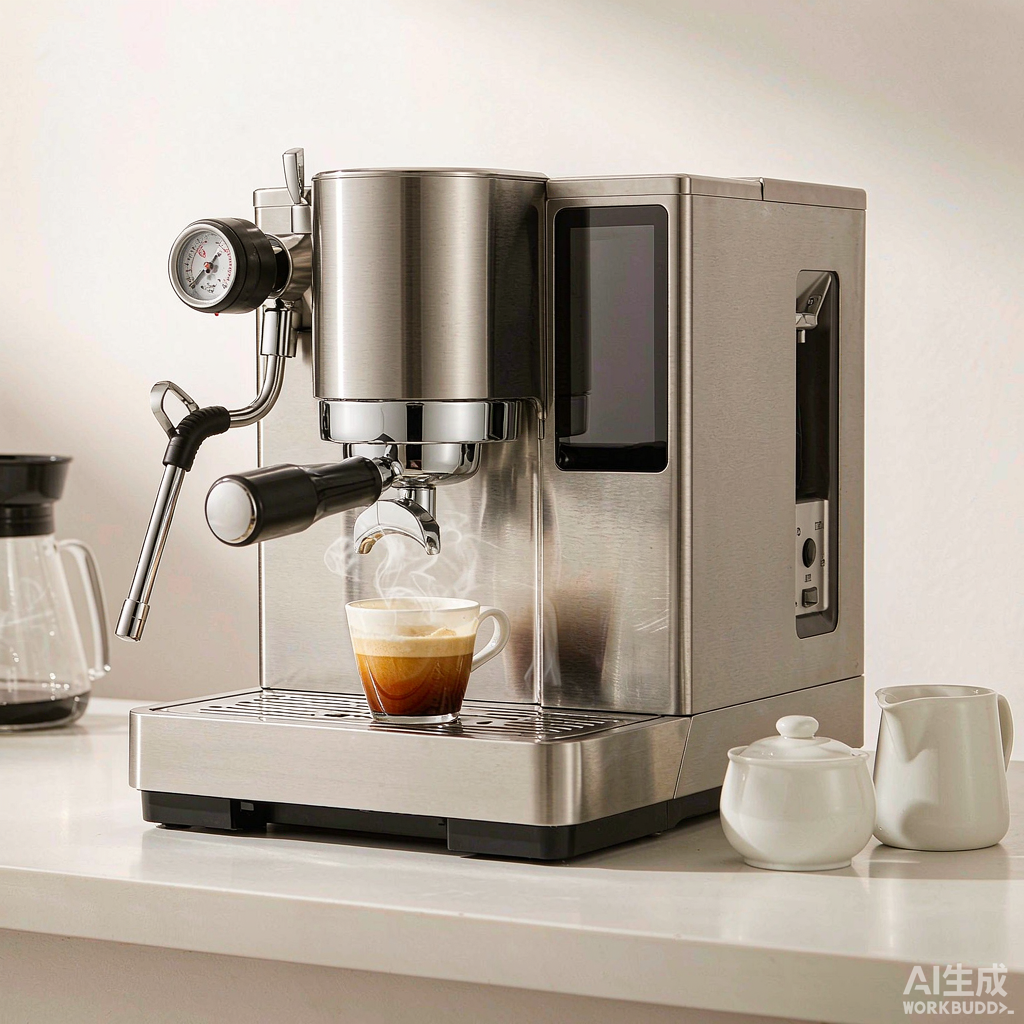
The most forgiving machine that still pulls real espresso
The Bambino Plus reaches brewing temperature in 3 seconds (we measured it). It has a thermocoil boiler that holds temperature within ±1°C during a 30-second pull — better than machines three times its price. The steam wand auto-textures milk to one of three temperatures and stops automatically.
What makes it our pick isn't the components — it's the user experience. A complete beginner can pull a café-quality shot and texture milk for a latte within 20 minutes of unboxing. The 54mm portafilter is non-standard (so accessories are pricier), but for the price, this is the easiest entry point into real home espresso.
Pros
- 3-second heat-up — fastest of any machine tested
- Auto-steam wand removes the hardest part of latte art
- Consistent shot quality even with inconsistent technique
- Compact footprint — fits on most counters
Cons
- 54mm portafilter (vs. industry-standard 58mm) — accessories limited
- Plastic drip tray feels cheap
- Steam wand is short — needs a 12 oz pitcher or smaller
Best mid-range: Gaggia Classic Pro (PID-mod)
The Gaggia Classic Pro is the espresso machine that built the home espresso hobby. Out of the box, it's underwhelming — no PID, slow warm-up, basic steam wand. But its commercial-grade 58mm portafilter, solid brass group head, and steel boiler are the bones of machines costing twice as much.
The "PID-mod" in the pick is a $75 aftermarket PID controller that bolts on in 30 minutes and gives you real temperature stability. With it installed, the Gaggia pulls shots comparable to machines costing $800+.
If you're willing to tinker — and maybe replace the steam wand with a Rancilio Silvia wand ($40) — the Gaggia is the smartest mid-range buy. If you want something that works perfectly out of the box, skip to the Breville.
Premium pick: Profitec Pro 600
The Pro 600 is what you buy when you're done tinkering and want a machine that works like a commercial unit. Dual stainless steel boilers mean you can pull shots and steam milk simultaneously — at full pressure, with no waiting. The rotary pump is whisper-quiet. The E61 group head is the industry standard for a reason.
At $2,400+ with a grinder, it's a serious investment. But for a household that drinks 4+ espresso drinks a day, the Pro 600 will outlast any other machine on this list by a decade or more.
What we didn't pick — and why
The De'Longhi Stilosa at $200 is a true budget winner for beginners, but its shot quality was inconsistent enough that we couldn't recommend it as a primary machine — it's a great backup or starter, not a forever machine. The Mr. Coffee One-Touch CoffeeHouse was disappointing: pre-ground espresso only, weak steam, and a tendency to overheat. The Nespresso Vertuo Plus produced consistently good shots but it's a capsule machine, not espresso — apples to oranges in this category.
FAQ
Do I need a separate grinder?
Yes — and this is the single most important piece of advice in this review. A $400 machine paired with a $200 grinder will out-pull a $1,000 machine paired with the grinder that came with it. If your budget is tight, the Baratza Encore ESP at $169 is the smart starting point.
How much maintenance is involved?
Daily: empty the drip tray, wipe the steam wand. Weekly: backflush with water (and a cleaning powder once a month). Every 2–3 months: descale, depending on your water hardness. None of the picks above are high-maintenance.
Can I make latte art with these machines?
With the Breville Bambino Plus, yes — the auto-texture wand produces milk good enough for basic latte art. With the Gaggia (PID-mod) or Profitec, you can produce café-quality microfoam with practice. Lattes aside, all three steam enough milk for two cappuccinos in one go.
Is $500 enough to get good espresso at home?
Yes — for most households, the Breville Bambino Plus plus a $169 Baratza Encore ESP grinder totals around $670 and out-performs most $1,500 setups. The next $500 buys incremental improvements, not transformational ones.
The bottom line
For most people, the Breville Bambino Plus is the right home espresso machine to buy in 2026 — fast, forgiving, and capable of café-quality shots within an afternoon of practice. If you're a tinkerer with a $700 budget, the Gaggia Classic Pro + PID-mod is the smartest mid-range buy. And if you're serious enough to spend $2,400 on a home espresso setup, the Profitec Pro 600 is the machine that will outlive every other appliance on this page.
Prices and availability are accurate as of the publish date above and may vary. As an Amazon Associate, we earn from qualifying purchases — see our affiliate disclosure.