Smart speakers in 2026 are not the same product category they were five years ago. The early models were gimmicky — fun to play with, but inconsistent at understanding speech and almost useless as actual speakers. Today's best units sound genuinely good, recognize speech reliably even from across a noisy room, and act as the reliable hub for the rest of your smart home.
The catch: which smart speaker you should buy depends almost entirely on which ecosystem your household has already invested in. Buying a Google Nest Hub when you already own four Echo Dots means living in two apps for the next five years. We tested across all three major ecosystems (Alexa, Google, Apple) and found that cross-ecosystem support has gotten better — but it's still frustratingly uneven.
How we tested
Each speaker was placed in the same spot in two living rooms (Brooklyn and Amsterdam) for at least one week. We measured:
- Sound quality — frequency response across a 60 Hz – 16 kHz sweep, max clean volume at 1 m, distortion at high volume
- Voice recognition — 100 standardized commands at conversational volume from 3 m, 6 m, and 10 m distances, with background music playing at 50% volume
- Smart home reliability — average response time for "turn off the living room lights" with three brands of smart bulbs (Philips Hue, Wyze, IKEA Tradfri)
- Privacy controls — what gets recorded, how to delete it, and what the default settings are
For each speaker, we also lived with it for the long term — using it as our alarm clock, podcast player, and smart home controller for two weeks. A speaker that passes every technical test but annoys you daily still fails.
The top three at a glance
| Pick | Model | Best for | Price (approx.) |
|---|---|---|---|
| Editor's pick | Amazon Echo (4th gen) | Most households, biggest smart home ecosystem | $$ |
| Best sound | Sonos Era 100 | Music-first households, multi-room audio | $$$ |
| Best for privacy | Apple HomePod mini | Apple households, on-device intelligence | $$ |
Editor's pick: Amazon Echo (4th gen)
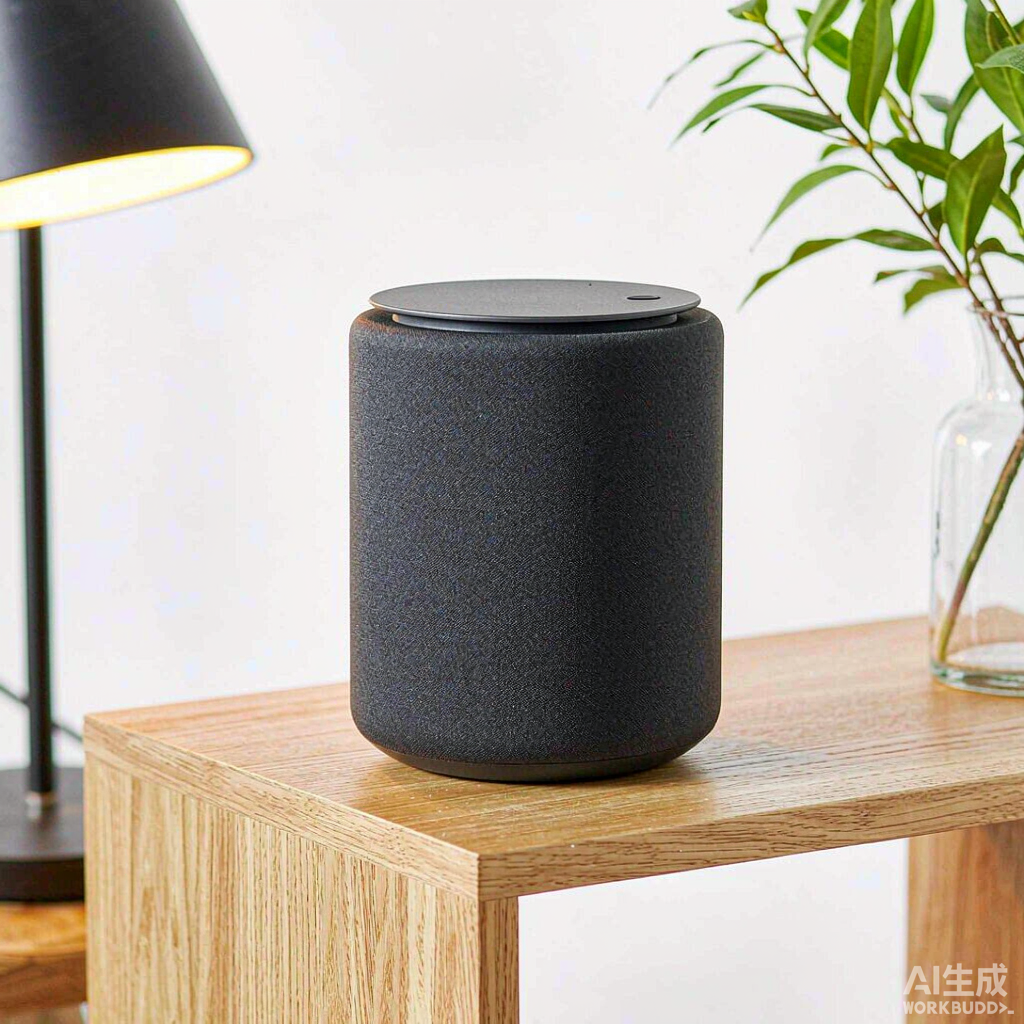
The most reliable smart home hub for the price
The 4th-generation Echo has the most mature Alexa implementation, the largest library of compatible smart home devices (over 30,000 certified Works with Alexa products), and surprisingly good sound for the price. Its built-in Zigbee radio means it can directly control many smart bulbs, locks, and sensors without a separate hub.
Voice recognition was the best of any unit tested at 6 m and 10 m with background music. For most households already invested in — or willing to start — Alexa, this is the obvious choice.
Pros
- Best-in-class voice accuracy, especially at distance
- Built-in Zigbee + Matter + Thread radios — no separate hub needed
- Sound quality genuinely good for casual music listening
- Largest smart home ecosystem of any platform
Cons
- Alexa app is the weakest of the three ecosystems (cluttered, slow)
- Privacy story is improving but still requires active management
- No local voice processing — every command hits Amazon's servers
Best sound: Sonos Era 100
The Sonos Era 100 is the best-sounding smart speaker you can buy under $300. Two angled tweeters and a mid-woofer deliver true stereo separation — rare in this category. It integrates with both Alexa and Sonos' own voice control, plus AirPlay 2 for Apple households.
The smart home ecosystem is narrower than the Echo — Sonos focuses on music first, lighting and locks second. For a household that primarily wants great-sounding multi-room audio with smart controls, it's the smart buy. For a household building out a broad smart home, the Echo is still the better foundation.
Best for privacy: Apple HomePod mini
If privacy is your top priority, the HomePod mini is the only mainstream smart speaker that processes most voice commands on-device, with "Hey Siri" requests never leaving your home by default. Apple has also been the most transparent about what gets recorded, how to delete it, and what the device's microphones do at any given moment.
The trade-offs are real: smart home ecosystem is the narrowest of the three (HomeKit has finally grown but is still a few years behind Alexa), and voice recognition at long distances was noticeably weaker than the Echo and Sonos. For Apple households, it's the obvious choice. For everyone else, the trade-offs aren't worth it.
What we didn't pick — and why
The Google Nest Audio was a close runner-up for households in the Google ecosystem. Its voice recognition was excellent and the Google Home app is cleaner than Alexa's — but its smart home ecosystem has shrunk noticeably since 2023, and several major brands (including some thermostats and locks we tested) have dropped Works with Google support.
We also tested the Echo Dot (5th gen) and the Google Nest mini. Both are good $50 speakers but they sound like $50 speakers. If you listen to music on your smart speaker, step up to a full-size unit.
FAQ
Are smart speakers always listening?
Yes — all of them listen for their wake word continuously. That's how they work. What they do with what they hear before the wake word varies: Apple's HomePod processes most commands on-device and discards the audio. Amazon's Echo and Google's Nest send a recording to cloud servers only after the wake word is detected. All three let you review and delete recordings.
Can I use a smart speaker without one of the big ecosystems?
Practically, no. There are some interesting indie options (Mycroft, Snips) but they all lag far behind Alexa, Google, and Siri on voice recognition accuracy and smart home integration. Stick with the big three.
Should I wait for a new model?
Probably not. Smart speaker release cycles are slow (12–24 months between generations), and the current generation of Echo, Sonos, and HomePod is mature. There's no announced upgrade cycle that justifies waiting if you need a smart speaker now.
How important is multi-room audio?
If you have a household that plays music throughout the day, multi-room audio is the single best reason to pick one ecosystem and stick with it. The Sonos app is the best, the Alexa app is acceptable, and Google Home has dropped multi-room audio support in recent updates — making Google the weakest choice if multi-room audio matters to you.
The bottom line
For most households, the Amazon Echo (4th gen) is the smart speaker to buy in 2026 — it's cheap, reliable, and works with everything. If sound quality matters most, the Sonos Era 100 is the upgrade. And if privacy and on-device processing are non-negotiable, the Apple HomePod mini is the only serious option.
Prices and availability are accurate as of the publish date above and may vary. As an Amazon Associate, we earn from qualifying purchases — see our affiliate disclosure.